
"espresso terms"
3000 article(s) found

Boutique Coffee Dictionary commonly used coffee terms about coffee utensils
* Propeller bean grinder: a bean grinder whose shape is similar to that of a propeller. * disk type bean grinder: a bean grinder whose knife is of flat plate type. * Cone bean grinder: a bean grinder with a tapered knife. * Bean storage tank: the space above the bean grinder to store coffee beans. * Bean trough: the place at the bottom of the bean grinder to receive the ground coffee powder, and the bean trough for business use is usually the dispenser.
What is the basic term Espresso Con Pana of espresso?
A Barista (coffee maker) is someone who knows every perfect concentrated drink formula. He can interpret your needs and make the drinks you really want. Shot (one espresso) one ounce of espresso. Each standard espresso consists of three parts: rich gold foam (crema), mellow taste (body) and warm heart (hear).

Scientific interpretation of Coffee extraction terms-Coffee must see knowledge
Coffee extraction is very knowledgeable, especially in the production of espresso. Here are some terms that professionals often use when talking about coffee extraction. Let's learn the following. Blonding: describes the conversion of the liquid from dark brown with tiger stripes to uniform light yellow. Usually this happens in the last 1amp 3 stage, which suggests that the extraction can be ended.

Italian coffee bean fancy coffee American coffee Italian mixed bean coffee is used in English
The special term for espresso Single:Espresso refers to brewing a cup of Espresso from a single portion of coffee beans (about 7g-9g). The term "Double:Espresso" refers to brewing a cup of Espresso from a double portion of coffee beans (about 14g-18g). Also known as DOPIER. Espresso topped with whipped cream espresso with cream E on top

Espresso Coffee Machine Terms
Espresso Terminology When you read our History chapter (forthcoming), you will find that you are still facing a very new technology. You'll also get the sense that the technology used in home espresso models is still a decade or more behind that used in commercial models. But at the same time, this phenomenon is changing. For this reason, I also condemn (or thank) the Internet. Over the past few years, we have also

Coffee culture coffee shops commonly used tasting terms
The term Complexity commonly used in coffee shops refers to the different levels of characteristics that coexist in the same cup of coffee, with high complexity, indicating that there are many kinds of sensory stimuli that can be sensed. It is important to note that these feelings include the aftertaste and are not necessarily limited to the present feeling when drinking. Texture, taste (Body, Mouthfeel) refers to the thick, sticky touch of coffee in the mouth.
Boutique Coffee Technical terms in Coffee Shop
The term Complexity commonly used in coffee shops refers to the different levels of characteristics that co-exist in the same cup of coffee, with high complexity, indicating that there are many kinds of sensory stimuli that can be sensed; it is important to note that these feelings include the aftertaste and are not necessarily limited to the immediate feelings of drinking. Texture, taste (Body, Mouthfeel) refers to the thick, sticky touch of coffee in the mouth.

Professional terms in coffee shops basic knowledge of fine coffee culture
The term Complexity commonly used in coffee shops refers to the different levels of characteristics that coexist in the same cup of coffee, with high complexity, indicating that there are many kinds of sensory stimuli that can be sensed. It is important to note that these feelings include the aftertaste and are not necessarily limited to the present feeling when drinking. Texture, taste (Body, Mouthfeel) refers to the thick, sticky touch of coffee in the mouth.
Coffee terms explain Italian espresso
The word Espresso comes from Italian, meaning fast, because espresso is delivered to customers as soon as it is made. Double espresso is made from 47 to 62.5 milliliters (1.5 to 2 ounces) of coffee extract, 88 to 95 degrees Celsius of pure water and 9 to 10 atmospheres in 22 to 28 seconds. The coffee extract is concentrated from 14 to 16 grams of coffee powder.

BARISTA Coffee Noun Boutique Coffee Studies
From Wikipedia, The free encyclopedia. Since approximately 1990, the term barista (the Italian word for bartender - masculine or feminine; plural: baristi (masculine) or bariste (feminine)) has been us
Common tasting terms in coffee shops
Complexity (Complexity) texture, taste (Body, Mouthfeel) acidity (sour) bitterness (Bitter) sweetness (Sweet)

The effect of Italian Coffee 1 coffee 1 cup GTX 2 beans are blended in proportion to form steam milk caramel
The special term for espresso Single:Espresso refers to brewing a cup of Espresso from a single portion of coffee beans (about 7g-9g). The term "Double:Espresso" refers to brewing a cup of Espresso from a double portion of coffee beans (about 14g-18g). Also known as DOPIER. Espresso topped with whipped cream espresso with cream E on top
Common coffee terms
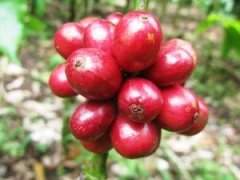
About coffee beans: * Coffee cherry: the fruit of a coffee tree, named because its rind is bright red and its shape is very similar to cherries. * round beans: when the coffee fruit is growing, one of the two seeds develops very well, and the other seed is eaten so that the coffee bean that should be oval becomes round. * Elephant beans: bigger than ordinary coffee beans and usually taste
Interpretation of coffee industry terms
About coffee beans: * Coffee cherry: the fruit of a coffee tree, named because its rind is bright red and its shape is very similar to cherries. * round beans: when the coffee fruit is growing, one of the two seeds develops very well, and the other seed is eaten so that the coffee bean that should be oval becomes round. * Elephant beans: bigger and tastier than ordinary coffee beans

Coffee Dictionary-- explanation of Coffee Industry terms
About coffee beans: * Coffee cherry: the fruit of a coffee tree, named because its rind is bright red and its shape is very similar to cherries. * round beans: when the coffee fruit is growing, one of the two seeds develops very well, and the other seed is eaten so that the coffee bean that should be oval becomes round. * Elephant beans: bigger than ordinary coffee beans and usually taste

The technical term "coffee" in Italian coffee comes from the Greek word "Kawen".
The word coffee comes from the Greek word Kawen, which means strength and enthusiasm. The name coffee comes from the Arabic word Qahwan, which means plant drink. Later, coffee spread all over the world and was named after its place of origin, KAFFA. It was not officially named after coffee until the 18th century. From the first cup of mellow coffee, after two hundred years, in 1530, the world

What are the common terms for coffee? Common communication terms?
Professional coffee knowledge exchange more information about coffee beans Please follow the coffee workshop (Wechat official account cafe_style) A wealth of coffee terminology does not make coffee tastier, but it makes it easier for you to communicate with other coffee lovers. (it is recommended to share or collect this article and have time to understand it.) Coffee extraction has several important concepts that must be understood: extraction

About caffeine caffeine is good for both short-term and long-term memory
1. Caffeine is good for both short-term and long-term memory. Earlier studies have found that caffeine is good for short-term memory, while recent studies have found that caffeine is also good for long-term memory. Dr. Jacqueline London, senior dietitian at Mount Sinai Hospital in New York, said eating 300 to 400 milligrams of caffeine a day can help prevent cognitive decline and prevent Alzheimer's disease. two。 Caffeine can be extracted.

Baristas must see the explanation of the terms of the fine coffee industry.
About coffee beans: * Coffee cherry: the fruit of a coffee tree, named because its rind is bright red and its shape is very similar to cherries. * round beans: when the coffee fruit is growing, one of the two seeds develops very well, and the other seed is eaten so that the coffee bean that should be oval becomes round. * Elephant beans: bigger than ordinary coffee beans and usually taste